Dr James B Nickoloff is an openly gay, Catholic theologian, who unlike many others to whom that description applies, is working in an eminently respectable corner of the Catholic academy. He is Associate Professor of Religious Studies at the College of the Holy Cross in Worcester, Massachusetts, and also an adjunct professor at the Jesuit University of Santa Clara, California, where he held a Bannan Felloship for 2oo8- 9. In June 2009, he delivered a lecture on his research at Santa Clara University for the academic year, “Intrinsically Disordered”: Gay People and the Holiness of the Church.
In his introduction to the lecture, he writes about himself
In the interest of “full disclosure,” let me make it clear that I write as a professional Catholic systematic theologian who is also a self-affirming gay man and legally married in Massachusetts.
With such a clear, honest self-description, it is not surprising that he has come under attack from orthotoxic Catholic fundamentalists. For example, the Holy Cross Cardinal Newman Society posted an outraged reaction to his participation in a Rainbow Alliance Week forum, at which he is alleged to have spread “confusion” and undermined Church teaching, displaying as evidence this flyer he distributed at the meeting. Yet every item on the flyer is taken from completely orthodox Catholic documents: from the Vatican, from the USCCB, or from diocesan offices. Now, how can one be said to be “undermining” Church teaching by disseminating it?
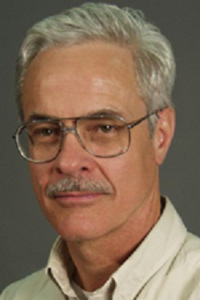
His Bannan fellowship essay, does however present a real and profound challenge to church teaching on homoerotic sexuality. It brings together several of the themes that have been preoccupying me, recently and previously. It is packed with useful information and insights, too much for me to deal with in a single post. I will instead be posting a series of extracts from this essay, with commentary, over the next week or so, interweaving it with my existing series on Bishop Robinson, and James Alison’s long interview.
By way of preview, I offer one short, delicious extract For those LGBT Catholics who are pessimistic of the possibility of change in Church teaching, followed by an outline of his main argument.
Many might agree with the perceptive theologian who once gave a useful summary of the pattern by which doctrine evolves in the Church. There are always three steps, he concluded after lengthy investigation. First, a new question arises to which the Church’s magisterium must give an answer. “No, the answer is no, has always been no, and will always be no,” reply the authorities. In a second step the hierarchy decides to study the question further. And in a third step, the magisterium declares its teaching, clearly and simply: “Yes, the answer is yes, has always been yes, and will always be yes.”
Introduction: Can the Church Sin?
Preparing the way for his main thesis, Nickoloff puts the question “Can the Church Sin?” (referring here to the Church as a collective entity, not to its individual members or leaders). He discusses the theological arguments on both sides, and notes the important papal apologies for past wrongs.
The Church’s Disordered Teaching
I have often referred to Vatican doctrine on homoerotic relationships as “disordered”. I was pleased to not that in this essay by a respectable theologian at a Jesuit university, he uses precisely the same phrase as the first of his three major divisions. When I have tried to grapple with this in the past, I have acknowledged that when Vatican documents apply the term to the homosexual condition, it does not mean what we assume it means in ordinary speech, referring in some way to mental health. I have accepted at face value the assurances of the apologists that it has some kind of deeper theological meaning: one that escapes me, but that I accepted would be understood by those with greater theological understanding. Yet James Alison asked recently, “Does it in fact mean anything at all?”, and in this essay, Nickoloff observes that there never has been any explanation of just what this extraordinary term really does mean.
Despised, and the Preferential Option for the Poor/Queer
Moving on from his discussion of the disordered teaching, he reflects on the importance in scripture of the concept of “despised” people (pointing out that the Greek word refers to those who have been rejected) - and to Christ’s very specific concern for them. It is now widely accepted Catholic orthodoxy that the Church has a particular obligation to put a concern for the poor and oppressed at the forefront of Catholic ministry, encapsulated in the phrase “the preferential option for the poor”. However, “poor” does not refer only to the materially impoverished - there are also many other forms of poverty. If we are to accept that the queer community have for too long been unfairly rejected, or “despised” by the institutional church, then we too should be included in that broader meaning. The implication, (although this is not his terminology), there really should be, a “preferential option for the queer”.
Discipleship: Lessons From the Man Born Blind
The third major division of the essay is what he has been leading up to, the important and challenging question that I have regularly referred to as “What is a gay Catholic to do?” Nickoloff phrases the question in rather more formal language, asking how are we to be disciples in the face of a disordered teaching by a church that has historically despised us?
Moving towards a proposal, he considers three broad strategies: to simply walk away from the Church, to stay in by closeted, “passing” for straight - or to stay in, openly and assertively gay / lesbian / or trans, in prophetic witness, using as an illustration an extended reflection on the Gospel story of the man born blind, who was restored to sight by the Lord.
Full text: “INTRINSICALLY DISORDERED”: GAY PEOPLE AND THE HOLINESS OF THE CHURCH”
The full text is packed with insights, ideas and questions, deserving careful study and reflection (even the footnotes are worth careful reading). I will be tackling it in bite -sized instalments - but if you want to go throught the full text yourself, you can find it at Santa Clara University, Ignatian Centre.
Related articles
- Alison:Does “Objectively Disordered” Mean Anything At All?
- Young Gay Catholic Affirms: “And yet, I am still Catholic”.
- Bishop Robinson: Catholic Assertions, Not Arguments
- Should Two Left-handed People Be Permitted to Marry?
- Theologian James Alison: Same - sex Unions Are Not Second - Best.
- James’ Alison’s Catholic Football Match.
- Bishop Robinson: Sexual Acts, or Relationships?
- Bishop Robinson on “The Offence Against God”


Thanks for bringing this to our attention, we need authoritative Catholic experts like James Nickoloff to help us effectively challenge the people who want to avoid considering the possibility of any Church error in tradition and its interpretation and application of scripture in the light of current expert knowledge, and who have not listened to the witness of lesbians and gay men.
At the end of his first section, dealing with ‘disordered’ teaching, he ends with:
‘But where is the social scientific data that shows the harmful effects of homosexual love? What are the verifiable consequences of this “disorder”? None of the Church’s pronouncements on the matter cite any scientific studies in support of its position, a fact which escapes no one’s notice.’
I certainly agree, but we’ve heard more than once from ignorant Church spokespeople and Catholic and other commentators that HIV/AIDS and sexually transmitted infection rates among gay men are ‘scientific’ proof of the ‘intrinsic disorder’ of homosexuality. (Lesbians are always completely ignored because HIV rates among lesbians would prove the opposite, that heterosexuality must be ‘intrinsically disordered’ because HIV rates among married heterosexual men and women are far worse than among lesbians. HIV is almost impossible to transmit through lesbian sexual activity.)
The Church apologists don’t (and couldn’t) quote any scientific studies demonstrating any causal connection between homosexuality and HIV and STI rates - there is none - but simply assert this on the basis of a misreading of statistics and their own ignorance of HIV and STI transmissions and their underlying causes.
http://www.thebody.com/index/christianity_catholic.html
http://en.wikipedia.org/wiki/Catholic_Church_and_AIDS
Here’s typical Catholic mis-statements http://www.catholiceducation.org/articles/homosexuality/ho0088.html
http://www.catholicnewsagency.com/news/sexually_active_homosexuals_pay_heavy_toll_in_hiv_infections_cdc_analysis_says/
and about some issues caused by Catholic teachings to people
http://ejournals.bc.edu/ojs/index.php/freshink/article/view/1270/1602
Chris, you’re right to point to the Church’s total disregard of scientific evidence on the subject. I’ll be getting to Nickoloff’s observations on the “disordered teaching” later, together with a separate piece on Archbishop Conti of Scotland, who accuses gay marriage advocates of placing ideas of equality above “reason and the law of nature”. On the contrary, it is he and his ilk who are placing defence of their faith above reason, and the irrefutable evidence from nature.
The problem I’m having, is that there are so many things that need to be said, I just can’t keep up.:(